
Floyd County Three-Day Release Check
The Floyd County current-inmate portal lists present custody rather than departures from the prior three days. It may display identity details, arrest date, charges, bond entries, and labels such as Pre-Trial, Boarder, Awaiting Transfer, or County Sentence. Those fields help identify a person and the case stage, but they do not state that a release occurred.
A three-day check reconstructs a period from several official sources. Search the roster, note the status and time, and then test the apparent change against booking, VINE, and the court file. If the result must be documented, request the release record. This method catches more than a one-day glance, while avoiding the false claim that Floyd County offers a public rolling 72-hour feed.
Check Floyd County Releases Over Three Days
Set the start and end of the period before searching. A precise date range helps the County Clerk or sheriff locate the right event and prevents an older booking from being confused with a recent release.
- Search the sheriff portal for the full name and compare age, arrest date, charge, bond, and custody label.
- Call Floyd County Jail booking at 706-291-4111 extension 8834 and ask whether the person left during the defined period.
- Check Floyd County VINE for a release, transfer, or other custody-change signal.
- Review the criminal docket for the bond, sentence, probation, or court action that could explain departure.
- Request the booking and release record through the county portal when an exact time, basis, or receiving agency is required.
The Floyd County same-day release check is narrower when the event likely occurred today.
Floyd County Release Record Fields
These are fields to verify through the official record, not promised columns on a public Floyd County list. A useful request ties the person to the booking and asks what ended that custody event.
| Field | Purpose in a 72-hour check |
|---|---|
| Name and date of birth | Confirms the correct person. |
| Booking or inmate number | Links the answer to one jail stay. |
| Release date and time | Places departure inside or outside the three-day period. |
| Release type or authority | Identifies bond, court order, sentence completion, probation action, or another basis. |
| Destination | Distinguishes community release from transfer. |
| Court and case number | Points to the docket supporting the event. |
VINE may show custody status or a change such as release or transfer, but it is a notice system. The court explains the order. The sheriff or county record documents the jail event.
Floyd Weekend Release Verification
A three-day period is especially helpful when a bond hearing, sentence event, or expected release falls near a weekend. Floyd County Magistrate Court handles first appearances and bond hearings six days a week. Court action and jail departure can therefore occur even when a records office is not operating on its ordinary weekday schedule.
Do not assign the date based only on when a name was first missing. The roster is live, not a historic log. VINE delivery can follow an agency update, and a court docket can show an order before jail staff finish processing it. Ask booking for the completed departure, then request the release record if the exact time matters.
A hold or transfer also changes the analysis. Someone may leave Floyd County Jail and appear later in GDC, another county, or a federal system. The three-day period should track the person across systems, not assume every roster removal means a return home.
Write down each check in time order: roster status, VINE notice, court entry, booking confirmation, and record response. A short timeline can reveal whether an apparent delay is just the gap between an order and completed jail processing. It also keeps a weekend search tied to evidence instead of memory. If two sources conflict, the completed release record and the originating court order should control the final conclusion.
Floyd County Open-Records Fallback
The Floyd County records portal is the formal fallback. It names the County Clerk as the official custodian under the Georgia Open Records Act. The sheriff's Admin Services instructions say to provide names, date of birth, and date ranges. Include all three, and state that the request seeks a booking and release record rather than the current roster.
The portal shown below is the county source for a documented multi-day request.
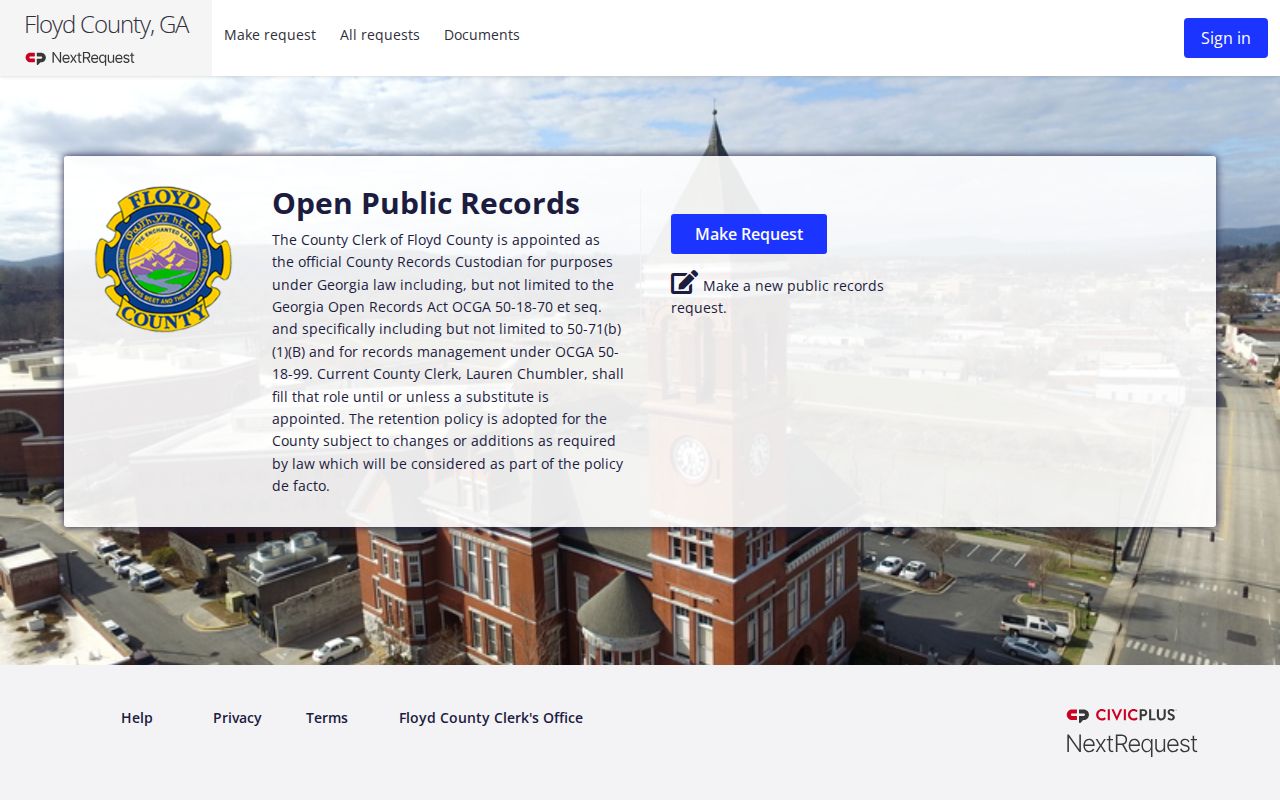
Its request trail is useful when a phone or status screen answers the immediate question but does not provide the underlying record.
Ask for the date and time of release, the authority or reason recorded, and any receiving agency. If Rome Police started the case, the City of Rome may hold the incident record, but the Floyd County jail record remains the source for departure from county custody.
Floyd Roster Changes Over 72 Hours
Roster labels are clues about where to search next. Pre-Trial often points toward bond and Magistrate Court action. County Sentence can raise sentence-completion or good-time questions. Awaiting Transfer calls for a receiving-agency search. Boarder suggests another authority may control the final destination. None of these terms is itself a release entry.
Compare snapshots only to identify a change. Then seek the event record. If a person moved into a Georgia state sentence, use GDC Find an Offender, which supports active and inactive scopes and a Released in the Past 15 Days sentence-status option. GDC is not the right system for an ordinary county bond release.
| Custody path | Source after departure |
|---|---|
| County jail to community | Booking, VINE, county release record, and court docket |
| County jail to state custody | GDC offender search and inmate records |
| State prison discharge | GDC inactive/released result and parole records when applicable |
| Federal release | BOP Inmate Locator, not VINELink or the Floyd roster |
Write a Floyd Release Request
A concise request should name the person, date of birth, and the exact three-day span. Identify Floyd County Jail and ask for the booking number, recorded release date and time, release authority, and destination or receiving agency. If the response identifies a transfer, use that agency's locator rather than asking the county roster to show later custody.
The sheriff's official request instructions are pictured below.
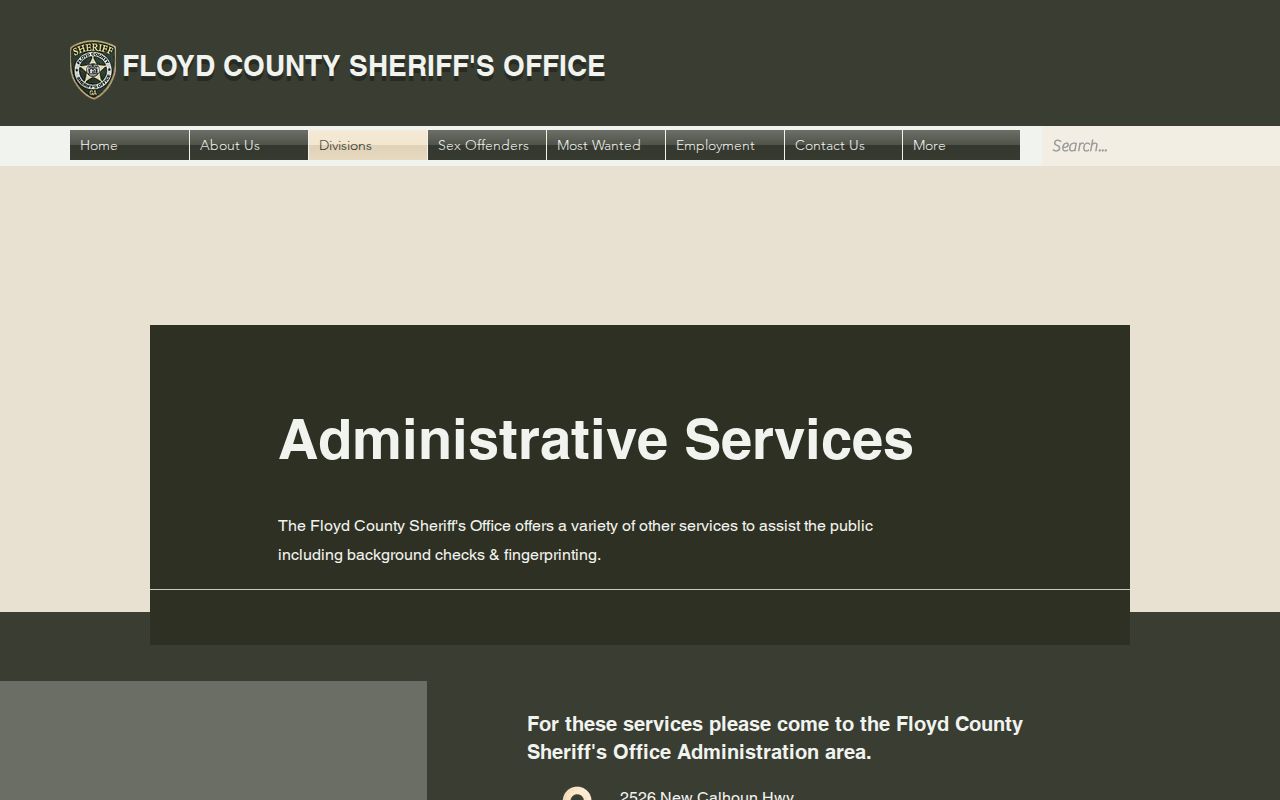
The instructions support a focused request with the identifiers and dates needed to locate the record.
Note: Ask for the completed release record, not a prediction of when processing might end.
Confirm Floyd Releases Across Systems
Georgia VINE is useful for a custody-change alert, but it is not a complete archive. A released result may show status language without the full charge history, court disposition, or sentence computation. For county custody, confirm through booking and county records. For the legal reason, use the court file.
If the person was transferred into a state sentence, the GDC record takes over. If the person left a federal facility, the BOP locator is the correct federal source. Immigration custody requires the ICE locator. These systems do not merge into one Floyd County 72-hour list, so the agency that held the person controls the answer.
When the date range includes a court event, compare the docket date with the jail's recorded departure time. They may differ because an order can precede the last booking steps. Probation paperwork, a hold, or transfer preparation can also affect the gap. The sheriff FAQ specifically warns that release dates vary with court orders, probation paperwork, good time, and other factors. That local caution is more reliable than assuming the first missing roster entry marks the exact release hour.
For one named person whose route is uncertain, the Floyd County released-inmate lookup explains how to move from the sheriff roster to state, court, and federal sources.
Public Record Search
Sponsored Results